Residential properties throughout central South Carolina encounter heavy vector pressure due to river valley humidity and extended warm seasons. Mosquito barrier suppression serves as an eco-conscious alternative to…
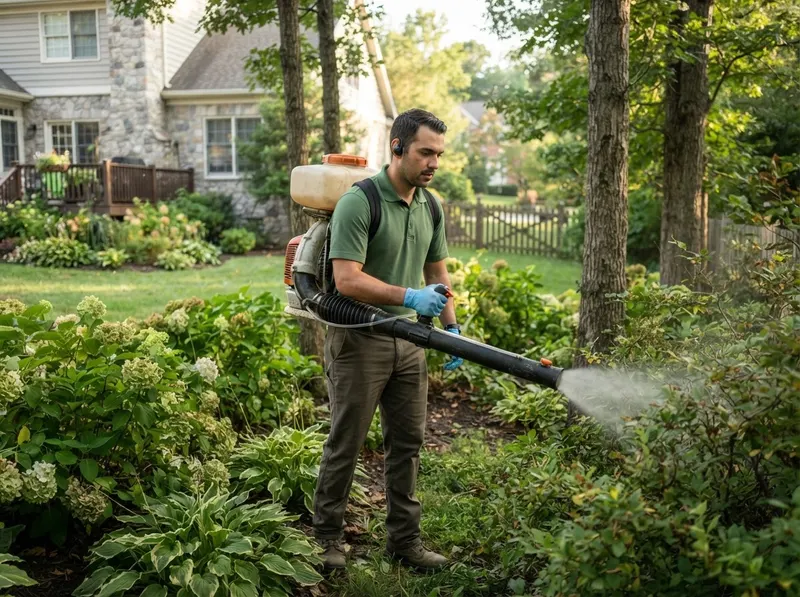
Residential properties throughout central South Carolina encounter heavy vector pressure due to river valley humidity and extended warm seasons. Mosquito barrier suppression serves as an eco-conscious alternative to broad-spectrum broadcast spraying. While untreated yards allow populations of Asian tiger mosquitoes (Centers for Disease Control and Prevention IPM guidelines) to reproduce within 7 to 10 days in micro-puddles, barrier suppression combines targeted micro-droplet applications with biological larvicides. The protocol coats the undersides of dense ornamental shrubbery, where adult vectors harbor during midday heat, while introducing naturally derived biological agents like Bacillus thuringiensis israelensis (Bti) registered by the EPA directly into birdbaths, catch basins, and unchlorinated moisture collection sites. This precise approach halts larval development within 24 hours without leaving persistent toxic residues on family play structures or vegetable gardens.
Property selection directly dictates whether spot remediation or a full continuous perimeter barrier is warranted. Homeowners in mature Shandon, Cottontown, and Earlewood landscapes with established oak canopies and heavy leaf mulch require deep-foliage misting along shaded perimeter fence lines. Conversely, lower-elevation residential sites bordering Lake Katherine or urban drainage basins near The Vista demand aggressive biological larvicide dispersion in recurring standing water zones. Unlike generic over-the-counter yard foggers that drift rapidly and dissipate within 48 hours, micro-encapsulated formulations bond to leaf cuticles and withstand up to 3 inches of rainfall, providing sustained suppression for 21 to 30 days per application cycle. Structural technicians simultaneously map out physical moisture retention zones, clearing choked gutters and identifying grading depressions that hold water longer than 72 hours, per mosquito biology standards set by the Entomological Society of America.
Site execution requires strict compliance with South Carolina vector control guidelines and local environmental protections. The Clemson University Department of Pesticide Regulation establishes strict drift-mitigation and pollinator-protection thresholds, which dictate that applications must occur during early morning hours before native pollinators become active on flowering blooms. In properties near waterways, such as areas along the Saluda and Broad rivers or urban tributaries feeding into South Carolina Department of Natural Resources protected wetlands, technicians observe mandatory untreated buffer strips measuring at least 25 feet. For commercial parcels or historic residences in Elmwood Park and Heathwood seeking sustainable compliance, methods adhere to the American Mosquito Control Association integrated management frameworks, prioritizing physical water diversion and non-target safety over calendar-based chemical flooding. Property diagnostics verify that treatments remain contained strictly within legal property boundaries without affecting beneficial honeybee colonies registered via the South Carolina State Beekeepers Association or municipal drainage channels maintained by the South Carolina Department of Health and Environmental Control.
Every job gets a firm, written price after a free on-site visit.
Tell us about your mosquito barrier suppression job in columbia and we'll send a clear, written quote, usually the same day.
 BrightOak Pest Elimination