Finding a reliable pest control service in Columbia requires addressing regional humidity and pest biology directly without indiscriminate indoor chemical exposure. Properties across Richland County face year-round pressure from wood-destroying subterranean termites, invasive Argentine ants, and persistent roof rats that exploit architectural gaps in older and new homes alike.
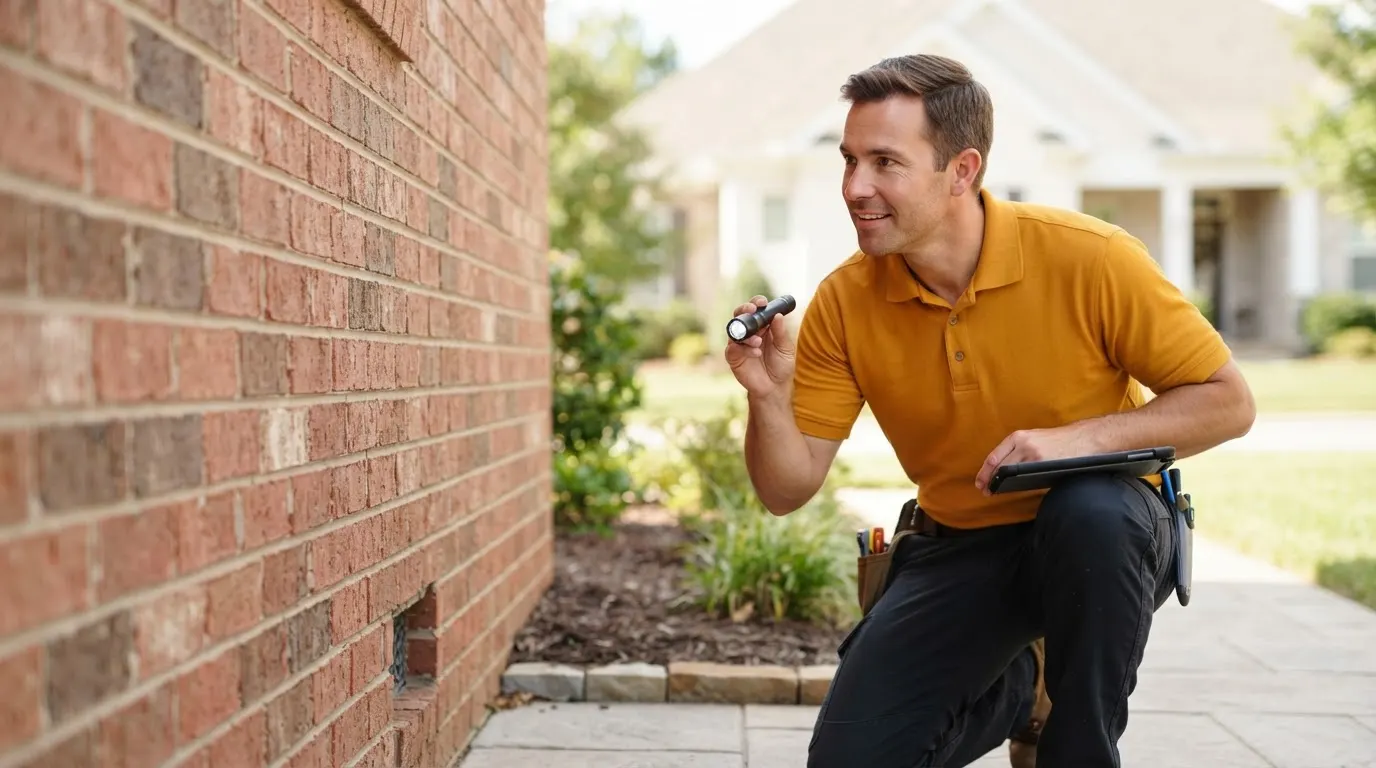
Pest control service in Columbia is an integrated structural and biological pest management system that identifies, eliminates, and blocks invasive insects and rodents from residential and commercial structures.
Every service reflects the same meticulous attention to detail, whether it's a single job or a larger pest control sevice project across columbia.
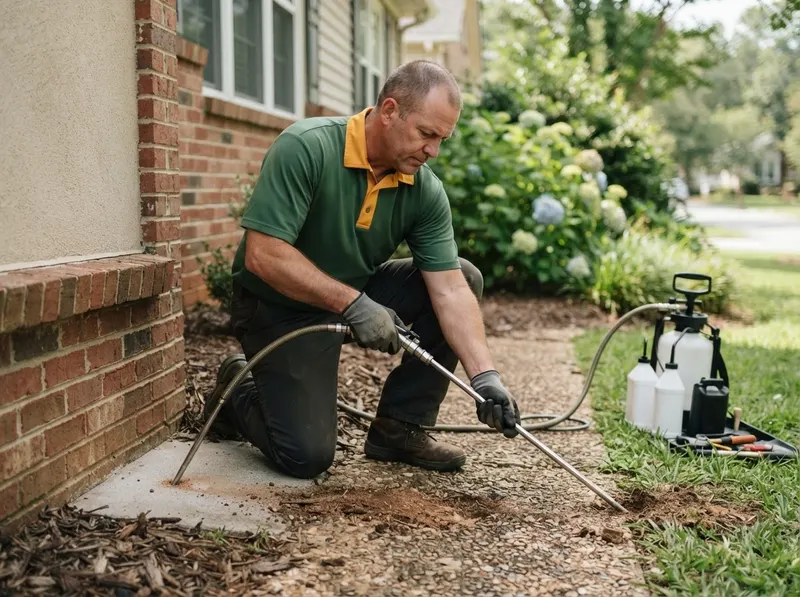
Subterranean termite management targets Eastern subterranean colonies (Reticulitermes flavipes) utilizing trenching and sub-slab injection methods alongside the Clemson University Department of Pesticide Regulation standards. Liquid non-repellent formulations such as fipronil establish continuous protection barriers around stem walls, piers, and slab seams without disturbing structural landscaping. Treatments stop structural wood fiber consumption at foundation interfaces, backed by calibrated monitoring sensors installed at 10-foot intervals around exterior property footings. For structures built over high water tables or adjacent to sensitive aquatic ecosystems, our technicians install hexamethylflumuron or noviflumuron baiting arrays flush with the lawn grade, allowing foraging worker termites to ingest slow-acting chitin synthesis inhibitors that travel through trophallaxis to collapse the subterranean queen and primary reproductive caste within ninety to one hundred twenty days. Physical drilling through finished masonry porches and tiled interior expansion joints utilizes diamond-tipped core bits, followed by low-pressure fluid dispersion calibrated at four gallons per ten linear feet per foot of depth, terminating with color-matched hydraulic cement plugs that restore architectural aesthetics while preventing subterranean bypass tunnels.
Get a quote →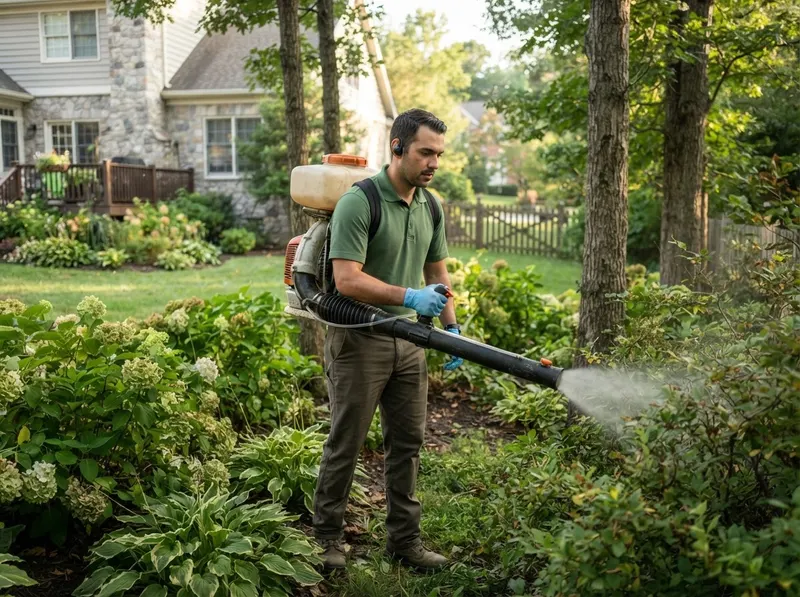
Targeted mosquito suppression applies organic micro-encapsulated adulticides and micro-biological larvicides containing Bacillus thuringiensis israelensis (BTI) directly to shaded resting foliage, under-deck areas, and non-draining low spots. Service intervals repeat on 21-to-30-day biological cycles from April through October to disrupt the development of Aedes albopictus (Asian tiger mosquito) larvae. Protocols align with municipal runoff safeguards established under the EPA Office of Pesticide Programs to protect domestic garden pollinators and neighborhood aquatic runoff zones. Technicians conduct physical habitat source reduction during every visit, tipping unmanaged catch basins, treating corrugated downspout extensions with water-soluble mineral oils, and fogging broadleaf vegetation margins up to a ceiling height of ten feet where female mosquitoes harbor during peak daylight heat. Structural misting applications leverage electrostatic turbine blowers that deposit microscopic droplets onto the undersides of horizontal foliage surfaces where adult mosquitoes rest, eliminating chemical drift onto flowering ornamentals visited by native bees and domestic honeybee colonies.
Get a quote →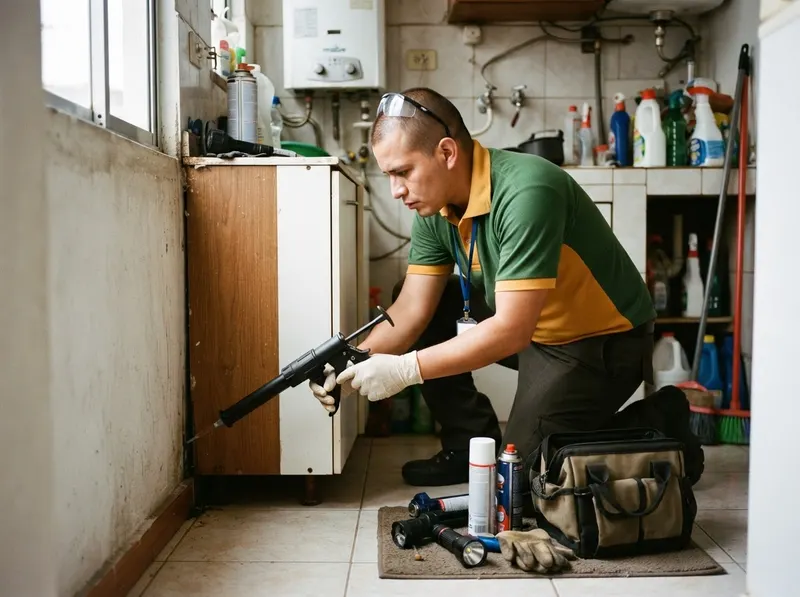
Intensive cockroach elimination addresses American cockroaches (Periplaneta americana), commonly known as palmetto bugs, and pervasive German cockroaches (Blattella germanica) within kitchen plumbing chases and appliance electrical housing. Technicians employ bait matrices formulated with insect growth regulators (IGRs) that break nymphal molting cycles without releasing airborne synthetic aerosols into living zones. Cleanouts include vacuum extraction utilizing HEPA filtration units to immediately eliminate allergen-bearing cast skins, droppings, and active egg cases (oothecae) from wall recesses. Technicians dismount electrical faceplates, inspect under-sink pipe collars, and place abamectin or indoxacarb gel reservoirs directly into localized structural stress points where ambient kitchen temperatures average above seventy-five degrees. Exterior perimeter barriers utilize micro-encapsulated suspension concentrates along foundation masonry bands and door thresholds to repel peridomestic American roaches migrating from municipal storm culverts, pine straw groundcover, and decaying hardwood mulch beds during humid summer evenings.
Get a quote →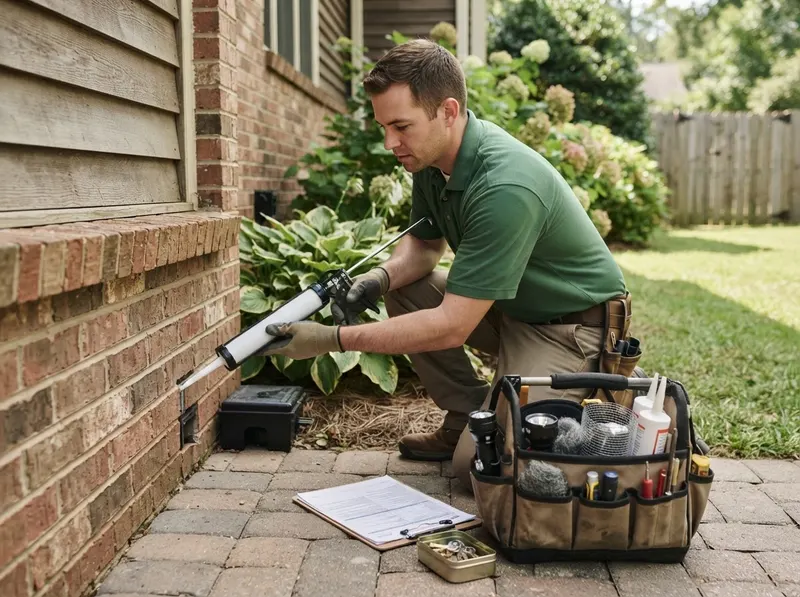
Rodent abatement removes Norway rats, roof rats (Rattus rattus), and house mice (Mus musculus) while eliminating future ingress through permanent architectural exclusions. Our specialists seal roof transitions, brick weep holes, foundation vents, and air conditioner line set penetrations using 16-gauge 0.25-inch galvanized steel wire mesh and copper mesh fill. Follow-up sweeps utilize mechanical snap traps placed within structural runways, complying with CDC Rodent Control Guidelines to avoid toxic secondary poisoning of local raptors and household pets. Technicians clean and sanitize contaminated attic insulation voids using antimicrobial fogging solutions that neutralize zoonotic pathogen vectors including hantavirus, leptospirosis, and lymphocytic choriomeningitis. Structural inspection routines trace grease marks (rub marks) along roof rafters, gnawed cellulose wiring jackets, and droppings located along ceiling drywall seams, verifying that mechanical hardware cloth flashing across gable vents and fascia board kickouts completely severs exterior rodent travel corridors without trapping live animals inside finished living spaces.
Get a quote →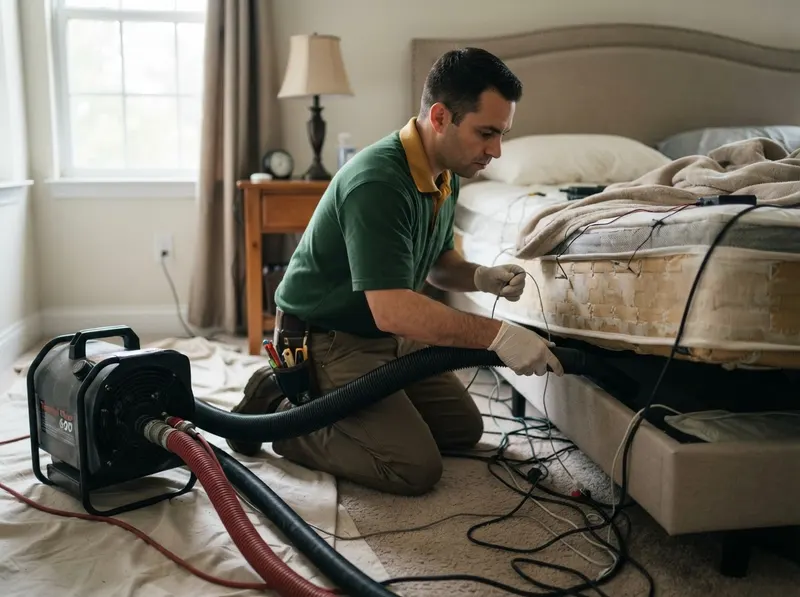
Discreet bed bug remediation resolves active Cimex lectularius infestations through targeted localized structural heat remediation and specialized residual silica dust applications. Industrial electric heaters raise targeted room ambient temperatures to a lethal threshold between 122°F and 135°F for sustained exposure periods, eradicating all life cycles from eggs to adults inside mattress seams and wall baseboards. This heat-based protocol adheres to the technical methodologies defined by the National Pest Management Association , allowing total eradication without discarding expensive structural furnishings. Thermal sensors placed inside heavy furniture, subfloor joints, and wall hollows feed data to mobile monitoring hubs, ensuring cold spots are completely eliminated during the continuous six-hour exposure window. High-velocity axial air movers circulate convective heat currents through clothing closets, drawer framing, and box spring interiors, eliminating chemical resistance liabilities associated with modern pyrethroid-resistant bed bug populations while ensuring families can re-enter treated rooms the very same evening.
Get a quote →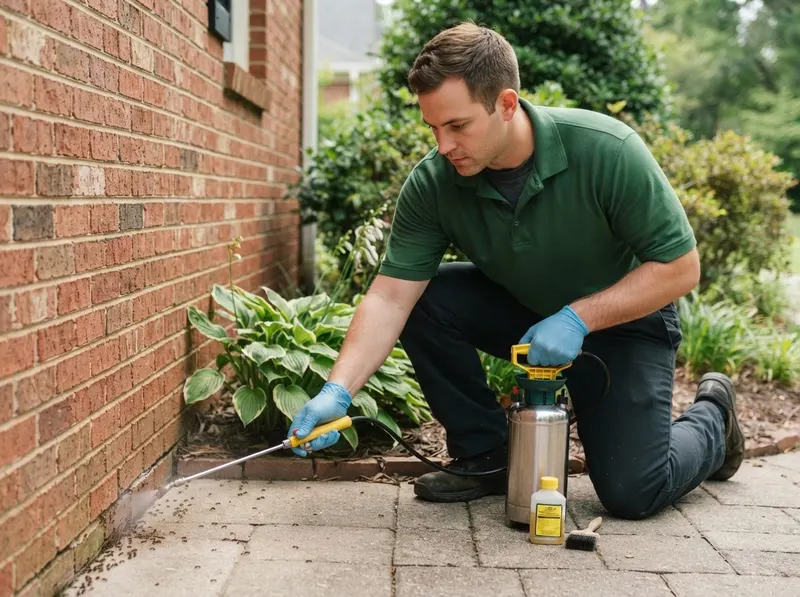
Ant management eliminates foraging trails and subterranean queens belonging to odorous house ants, Argentine ants, and red imported fire ants (Solenopsis invicta). Non-repellent delayed-action liquid baits and borate dusts are introduced directly into exterior moisture points and wall voids, allowing foraging workers to distribute the active matrix throughout satellite super-colonies. Exterior granular placements around the foundation dripline follow application safety procedures outlined by the South Carolina Department of Public Health to prevent domestic chemical migration. Fire ant mounds across residential turfgrass receive individual drench treatments using metabolic inhibitors alongside broadcast application of growth regulators that prevent queen oviposition and worker pupation. Indoor trailing routes along kitchen backsplash caulking and bathroom plumbing risers are treated with sweet- and protein-based matrix attractants containing dinotefuran or fipronil, neutralizing multiple reproductive queens hidden deep beneath concrete slab expansion voids and exterior hardscaping within three to seven days.
Get a quote →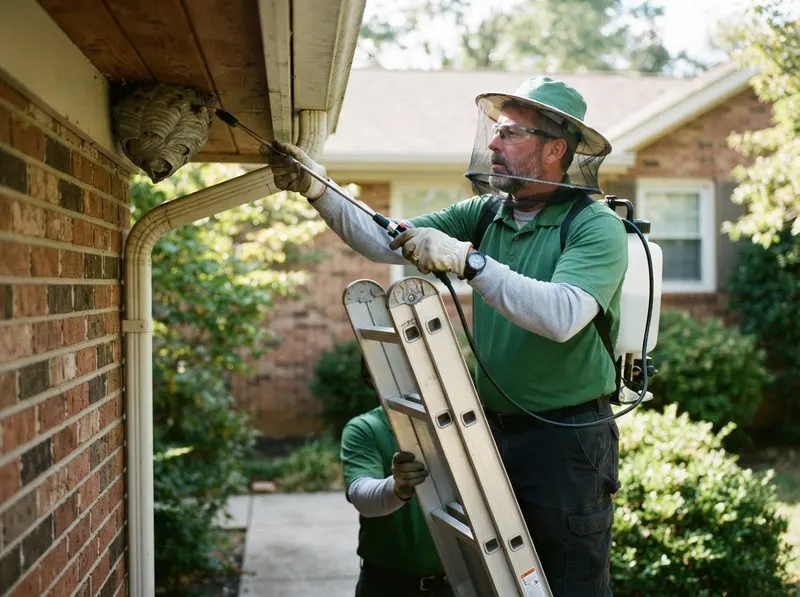
Safe elimination and physical removal of aerial and subterranean stinging insects targets paper wasps, yellowjackets, and bald-faced hornets nesting along structural soffits, meter boxes, and crawlspace skirts. Technicians utilize non-flammable freezing agents and mechanical pole-mounted vacuums to secure defensive colonies without triggering swarming behavior near entrances. Structural entry voids are subsequently treated with desiccating dusts and sealed to prevent secondary reinfestation during late-summer defensive cycles. Specialized personnel wear reinforced sealed suits while treating subterranean yellowjacket nests located in abandoned rodent burrows or lawn root systems, injecting non-volatile biological formulations directly into the primary entrance burrow after dusk when foraging hornets have returned to the brood chamber. Physical architectural scrapers strip paper wasp nests from eaves, chimney chase covers, and window lintels, followed by localized micro-emulsion sprays that break territorial chemical pheromone markers to deter scout wasps from rebuilding nests along the same structural woodwork.
Get a quote →Preventive crawlspace encapsulation and moisture remediation targets structural wood-decay fungi and subterranean habitat conditions beneath older elevated residential flooring. Crews install heavy-duty 12-mil to 20-mil reinforced polyethylene floor vapor barriers, close foundation vents, and install commercial-grade low-temperature dehumidifiers meeting specifications from the U.S. Department of Energy . Lowering wood moisture content below 15% directly starves subterranean wood-destroying organisms and stops moisture-seeking insects from nesting beneath subflooring. Technicians mechanically scrape active white-rot and brown-rot fungal mycelium from floor joists and subflooring before applying concentrated disodium octaborate tetrahydrate (DOT) solutions that penetrate structural lumber up to 0.75 inches, rendering the wood matrix unpalatable to wood-boring powderpost beetles (Lyctinae) and drywood termites. Sump pump discharge lines and condensation drainage piping are routed outside through sealed masonry collars, ensuring ground moisture cannot evaporate upward into the subfloor framing or elevate living area relative humidity levels above fifty percent.
Get a quote →You get a firm, itemized quote for your pest control sevice before any work begins, no surprises, no pressure.
Careful prep, tidy work, and a full cleanup when we are done. We treat your home and belongings like our own.
The same trusted, background-checked team from the first call to the final check.
Selecting structural pest remediation depends heavily on pest biology, structural foundation styles, and environmental proximity to waterways. If your property displays localized mud tubes, hollowed trim, or discarded wings near windowsills between March and May, you need liquid non-repellent barrier trenching or subterranean bait station installation rather than surface spraying. Liquid non-repellent termiticides allow insects to travel through treated soil zones back to the central subterranean colony, whereas over-the-counter repellents simply deflect foraging insects to untreated structural wood framing.
If you are dealing with nocturnal scurrying within attic crawlspaces or gnaw marks along electrical wiring, physical mechanical exclusion utilizing galvanized hardware cloth and architectural metal flashing is necessary; chemical rodenticides alone risk carcass decay inside wall voids and secondary poisoning of domestic animals. For flying insects like container-breeding mosquitoes along Congaree basin drainages, automated misting systems and monthly botanical larvicide treatments on stagnant water sources resolve breeding cycles, whereas standard aerosol knockdowns offer only 24 to 48 hours of temporary adult relief. If your home sits on a traditional raised crawlspace foundation common in historic districts, vapor barrier installation combined with crawlspace encapsulation and dehumidification resolves chronic fungal mold and wood-boring beetle infestations; slab-on-grade suburban constructions instead require perimeter siliconized acrylic sealing and expansion joint treatments.
The operational trade-off is mechanical entry sealing requires a higher initial investment than recurring cosmetic spraying, but physical exclusion permanently eliminates structural access pathways without introducing recurring chemical loads into living areas. For acute indoor German cockroach infestations, precision bait matrices paired with insect growth regulators require a minimum biological incubation window of 14 to 21 days to break the reproduction cycle, whereas chemical space fogging provides immediate cosmetic knockdown of adult foragers while driving egg-bearing females deeper into wall insulation where nymphs hatch protected from residual sprays. Homeowners seeking chemical-free bed bug eradication can select whole-room thermal remediation which raises structural core temperatures to lethal levels across a single four-to-six-hour thermal soak, avoiding pesticide residues completely; conversely, localized chemical liquid-and-dust protocols lower initial remediation costs but require two to three follow-up inspections spaced fourteen days apart to target emerging first-instar nymphs.
When managing subterranean termites in properties with shallow foundation footings near open domestic wellheads or decorative water features, active bait station matrices installed flush with the turf line eliminate the risk of subterranean chemical drift into local groundwater, whereas continuous liquid trenching remains the preferred protocol for monolithic concrete slab foundations where soil injection can be executed without disturbing hydraulic water tables. For wildlife breaches involving squirrels or raccoons entering roof junctions, one-way structural exit doors paired with heavy-gauge chimney caps safely vacate the nesting animals before permanent sheet-metal sealing occurs, avoiding structural decay issues associated with trapping animals within finished ceiling enclosures. Balancing immediate chemical suppression against long-term architectural hardening ensures your home resists continuous pest recolonization while preserving baseline indoor environmental quality.
Every project gets a firm, written price after a free on-site visit. Ranges below for orientation.
Tell us about your pest control sevice job and we'll send a clear, written quote, usually the same day. Or just call and talk to a real columbia pro.
(803) 887-7754
Properties throughout Richland County sit in an inland humid subtropical climate characterized by prolonged summer heat indexes over 90°F and an extensive water system fed by the Broad, Saluda, and Congaree rivers. Elevated groundwater levels around areas like Lake Katherine, Forest Acres, and the river bottomlands near Congaree National Park create chronic high-humidity conditions in crawlspaces, accelerating subterranean termite pressure and providing continuous outdoor breeding grounds for invasive palmetto bugs and Asian tiger mosquitoes. Furthermore, the historic architectural framing and mature hardwood canopy across older neighborhoods like Shandon, Earlewood, Cottontown, and Elmwood Park give tree-dwelling roof rats easy overhead runways into attic soffits and roof lines near the University of South Carolina Horseshoe and South Carolina State House, requiring localized structural exclusion techniques rather than simple chemical applications. Historic homes throughout the downtown Columbia core frequently feature stacked-brick support piers, heart-pine floor joists, and non-vented fieldstone foundation footings that absorb subsurface moisture during seasonal rain surges along the Congaree basin. These architectural factors create localized relative humidity readings within subfloors that routinely exceed 70%, establishing optimal biological habitats for wood-boring powderpost beetles, surface mold spores, and subterranean termite shelter tubes that climb unnoticed up interior foundation stem walls. In suburban growth corridors surrounding Lower Richland and the northern rim of Forest Acres, slab-on-grade homes encounter substantial pressure from Argentine ants and red imported fire ants that construct extensive subterranean highway systems beneath concrete driveway slabs and brick masonry veneer ties. Standard over-the-counter surface treatments wash away quickly during heavy summer thunderstorms that routinely saturate Richland County topsoil, requiring professional subsurface liquid termiticide trenching and slow-release bait installations that bind tightly to the local clay-heavy soil profile without migrating into municipal stormwater collection basins.
Free estimates for columbia & the surrounding area.
 BrightOak Pest Elimination