Columbia's humid subtropical climate along the Congaree River basin fosters an extended active cycle for ectoparasites, stretching from early March through late November. The dense canopy in historic pockets like…
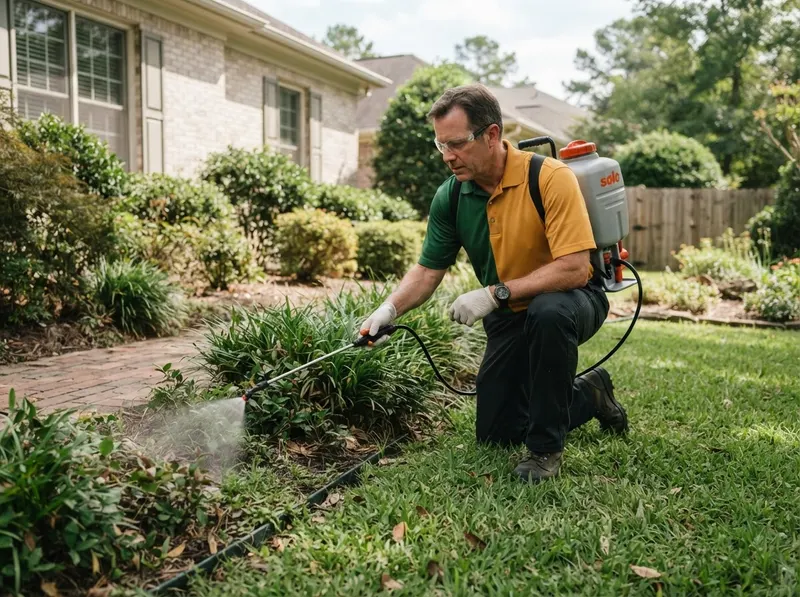
Columbia's humid subtropical climate along the Congaree River basin fosters an extended active cycle for ectoparasites, stretching from early March through late November. The dense canopy in historic pockets like Shandon and Earlewood preserves high ground-level moisture, allowing flea larvae to mature in shaded organic debris. Standard perimeter chemical sprays often miss soil-level pupae resting beneath dense mulch beds. Our team conducts targeted applications that integrate insect growth regulators (IGRs) with residual adulticides, breaking the reproductive lifecycle without indiscriminate broadcast spraying across non-target flowering beds.
Properties bordering wooded areas in Forest Acres, Heathwood, and Lake Katherine face continuous tick pressure introduced by urban wildlife corridors. Ticks climb low-hanging brush, tall fescue, and English ivy to access passing hosts through questing behavior, as detailed by the Centers for Disease Control and Prevention. Treatment focuses on ecotone edges, the transitional boundary where manicured turf meets natural woods or riverbank buffer zones. Field staff assess leaf litter depth, pine straw borders, and shaded crawl space perimeters, applying microencapsulated formulations designed to adhere to organic matter through midsummer rainstorms.
Environmental protection remains central to residential yards housing pets and young children. Our protocols adhere to the standards outlined by the Environmental Protection Agency, selecting targeted solutions designed to bind rapidly with soil particles rather than run off into local storm drains. Technicians provide clear re-entry instructions: treated zones remain off-limits only until liquid applications dry completely, which averages 60 to 90 minutes on warm Midlands afternoons. For sustained control, properties with severe rodent-vectored tick populations receive habitat modification recommendations, addressing harborages under historic crawl spaces common in Cottontown and Elmwood Park.
Homeowners managing active domestic pet infestations achieve optimal results when coordinating veterinary oral preventative treatments concurrently with exterior grounds remediation. Guidance from the Companion Animal Parasite Council emphasizes addressing both host animals and environmental reservoirs simultaneously. Exterior remediation addresses outside breeding zones, while mechanical vacuuming and indoor sanitization interrupt indoor emergence. Commercial properties and residential rentals near The Vista or Rosewood benefit from structured barrier treatments that prevent stray animals from re-seeding lawns between seasonal cycles.
Every job gets a firm, written price after a free on-site visit.
Tell us about your flea and tick yard remediation job in columbia and we'll send a clear, written quote, usually the same day.
 BrightOak Pest Elimination